What's new
Christian Community Forum

Register a free account today to become a member! Once signed in, you'll be able to participate fully in the fellowship here, including adding your own topics and posts, as well as connecting with other members through your own private inbox!

Pakistan opens land trade routes to Iran, despite US blockade

Pakistan has opened six overland transit routes for goods bound for Iran, aiming to clear thousands of containers stranded at Pakistani ports as the US-Iran conflict disrupts shipping through the Strait of Hormuz.

Pakistan’s Commerce Ministry issued an order on Saturday allowing third-country goods to be moved through Pakistan and delivered to Iran by road. The routes link Karachi, Port Qasim and Gwadar with Iranian border crossings at Gabd and Taftan.

A Pakistani official told Arab News that about 3,000 Iran-bound containers had been stuck at Karachi and Port Qasim since the crisis began.

“Currently, around 3,000 Iranian containers have been lying at Karachi and Port Qasim since the crisis began,” the official said. “As shipping companies could not wait for the crisis to end to drop the cargo at Iranian ports.”

The move comes as maritime trade with Iran has been squeezed by regional fighting, Iranian restrictions in the Strait of Hormuz and a US naval blockade targeting Iranian ports.


 
Pakistan has opened six overland transit routes for goods bound for Iran, aiming to clear thousands of containers stranded at Pakistani ports as the US-Iran conflict disrupts shipping through the Strait of Hormuz.

Pakistan’s Commerce Ministry issued an order on Saturday allowing third-country goods to be moved through Pakistan and delivered to Iran by road. The routes link Karachi, Port Qasim and Gwadar with Iranian border crossings at Gabd and Taftan.

A Pakistani official told Arab News that about 3,000 Iran-bound containers had been stuck at Karachi and Port Qasim since the crisis began.

“Currently, around 3,000 Iranian containers have been lying at Karachi and Port Qasim since the crisis began,” the official said. “As shipping companies could not wait for the crisis to end to drop the cargo at Iranian ports.”

The move comes as maritime trade with Iran has been squeezed by regional fighting, Iranian restrictions in the Strait of Hormuz and a US naval blockade targeting Iranian ports.

Obviously Pakistan is defying the US Administration's Blockade being used to pressure Iran into complying with US peace efforts.
This Administration must use better judgement in who to allow as "mediators" for negotiation talks, that wont work anyway, but thats not the point.
Pakistan and Qatar are Both supporters of the Iranian Islamic Regime, yet Both have served as "mediators" for negotiation talks.
 
I don't blame Pakistan, myself. Where there is demand supply routes will usually develop. Capitalism has a way that way... I've got nothing against the current US blockade, but I think we should continue pounding Iran until they've got nothing left that they can use offensively. I don't think the naval blockade will do anything to bring about an end of the war and compliance by Iran to anything.

The US can blockade and sanction all they want, but it isn't illegal for other countries to ignore another country's blockades and/or sanctions.

Yesterday I read an account that may or may not have any truth to it that Iran was managing to get oil to China by land. My thought is if they aren't now, they will be, just as other nations affected by Iran's shenanigans in the Hormuz Strait will find alternative means to get their products to customers.

So, let's finish this war with Iran. I suspect that's what Israel really wants to do. It seems we're currently floundering a bit here. If this is a strategic pause to re-arm, may the pause end soon.
 

Breaking The Stalemate​

Energy prices continue their ascend –with Brent futures trading above $124/barrel – after media report that the US may try to break the stalemate in the US-Iran war by force. Axios reports that military leaders will brief Trump on potential military options today. Reportedly, the Pentagon is preparing a wave of “short and powerful” strikes on Iran, likely targeting infrastructure.

Yesterday, Trump still suggested that he would not resume the bombing campaign. The US president said he believes the US blockade of Hormuz is the most effective form of leverage. However, that strategy has so far failed to exert significant concessions from Iran. So, these military strikes –or the mere threat thereof– could be an option if Iran does not budge on the nuclear issue.

The news injects fresh tail risks into the outlook for the war, energy prices, and inflation around the globe. Amidst the unusually high uncertainty about the outlook, the FOMC kept the federal funds target range unchanged at 3.50-3.75%, as widely expected.
 

U.S. Tightens Sanctions as Iran Admits Sting of ‘Major’ Leadership Losses​

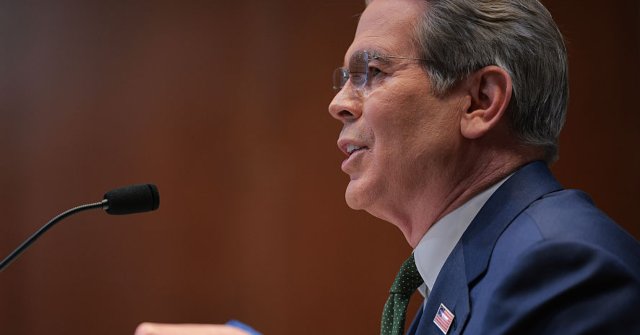
The U.S. Treasury Department’s Office of Foreign Assets Control (OFAC) on Tuesday announced new sanctions against “35 entities and individuals that oversee Iran’s shadow banking architecture and facilitate the movement of the equivalent of tens of billions of dollars.”


The Treasury Secretary pointed out that a tipping point envisioned by the plan to blockade Iran has nearly been reached, as Iran’s primary oil export terminal on Kharg Island has nearly exceeded its storage capacity.

With nowhere to store their oil, the Iranians will be forced to sharply reduce production, “resulting in an additional approximately $170 million per day in lost revenue, and causing permanent damage to Iran’s oil infrastructure.”

Iran has tried, and failed, to slip overloaded supertankers past the U.S. Navy blockade. The Iranians have reportedly broken out last-ditch measures to boost their capacity with “junk storage,” from reactivating long-decommissioned containers to dragging old tankers to Kharg Island to serve as floating emergency storage.

 
Back
Top