Register a free account today to become a member! Once signed in, you'll be able to participate fully in the fellowship here, including adding your own topics and posts, as well as connecting with other members through your own private inbox!
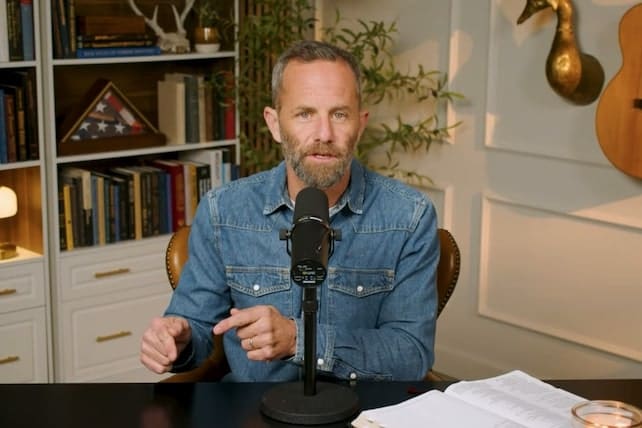
In a recent episode of his show, Kirk Cameron publicly announced a change in his long-held views on Hell. Previously accepting the view of eternal conscious torment for the wicked, he now rejects it — calling such a fate “cruel and unusual punishment.”
Cameron argues that the Bible, especially in its Old Testament writing, does not depict the souls of the wicked as immortal. Instead, the only souls promised eternal life — immortality — are those granted to believers.
Cameron’s shift reflects this framework: Hell, in his new view, is not an eternal “pain chamber,” but the final end for those outside redemption.
As expected, Cameron’s announcement has sparked intense debate. Some readers of the original article — and commenters on related forums — have pushed back, pointing to verses such as Matthew 25:46 (which contrasts “eternal punishment” with “eternal life”) as evidence for traditional eternal-torment doctrine. One commenter wrote,
“Jesus spoke those words. Eternal and eternal. Seems pretty cut and dried to me.”
(OPINION) In a recent episode of his show, Kirk Cameron publicly announced a change in his long-held views on Hell. Previously accepting the view of eternal conscious torment for the wicked, he now rejects it — calling such a fate “cruel and unusual punishment.” Cameron argues that the Bible...
Kirk Cameron responds to backlash on his changed view on Hell
Kirk Cameron on Annihilationism Debate: I Simply ‘Acknowledged Uncertainty’
Evangelist Kirk Cameron: ‘I Believe in Hell’
To clarify his stance, Kirk Cameron told viewers that he believes in hell and judgment and hasn’t “denied the authority of Scripture.” Instead, he pondered “an honest theological question, one that faithful Christians have wrestled with for hundreds, even thousands of years.”
Confusion swirls around annihilationism and conditionalism, according to Cameron. Rather than teaching that wicked people just “poof disappear,” he said, they hold that “immortality is not something that all people automatically possess.”
Judgment and “real punishment” still occur, Cameron continued, but the debate centers on “what Scripture says is the final outcome of that judgment.” In other words, “Does that conscious torment last forever and ever and ever,” he asked, “or does it eventually come to an end and the person is annihilated?”
Many theologians and church leaders whom Cameron most admires teach “the traditional view of hell,” he said, “and I honor them deeply for the way they handle the Word of God with extreme care and reverence and holiness with a desire to understand it.”
Yet questions about eternal torment date back to the early church fathers, Cameron explained. “So when I ask questions about how the Bible describes final judgment, I am not rejecting orthodoxy,” he said. “I’m standing in a long Christian tradition that believes Scripture deserves careful, humble, and honest study.”
Kirk Cameron responds to backlash on his changed view on Hell
Kirk Cameron on Annihilationism Debate: I Simply ‘Acknowledged Uncertainty’
Evangelist Kirk Cameron: ‘I Believe in Hell’
To clarify his stance, Kirk Cameron told viewers that he believes in hell and judgment and hasn’t “denied the authority of Scripture.” Instead, he pondered “an honest theological question, one that faithful Christians have wrestled with for hundreds, even thousands of years.”
Confusion swirls around annihilationism and conditionalism, according to Cameron. Rather than teaching that wicked people just “poof disappear,” he said, they hold that “immortality is not something that all people automatically possess.”
Judgment and “real punishment” still occur, Cameron continued, but the debate centers on “what Scripture says is the final outcome of that judgment.” In other words, “Does that conscious torment last forever and ever and ever,” he asked, “or does it eventually come to an end and the person is annihilated?”
Many theologians and church leaders whom Cameron most admires teach “the traditional view of hell,” he said, “and I honor them deeply for the way they handle the Word of God with extreme care and reverence and holiness with a desire to understand it.”
Yet questions about eternal torment date back to the early church fathers, Cameron explained. “So when I ask questions about how the Bible describes final judgment, I am not rejecting orthodoxy,” he said. “I’m standing in a long Christian tradition that believes Scripture deserves careful, humble, and honest study.”
When a person starts listening to what others say about the word and allowing their statements to cloud their own reading of the word, that is where the confusion comes in. You read the word straight and receive the literal meanings as truth rather than try to make it mean what you think it should mean, and there is no confusion.
Kirk Cameron responds to backlash on his changed view on Hell
Kirk Cameron on Annihilationism Debate: I Simply ‘Acknowledged Uncertainty’
Evangelist Kirk Cameron: ‘I Believe in Hell’
To clarify his stance, Kirk Cameron told viewers that he believes in hell and judgment and hasn’t “denied the authority of Scripture.” Instead, he pondered “an honest theological question, one that faithful Christians have wrestled with for hundreds, even thousands of years.”
Confusion swirls around annihilationism and conditionalism, according to Cameron. Rather than teaching that wicked people just “poof disappear,” he said, they hold that “immortality is not something that all people automatically possess.”
Judgment and “real punishment” still occur, Cameron continued, but the debate centers on “what Scripture says is the final outcome of that judgment.” In other words, “Does that conscious torment last forever and ever and ever,” he asked, “or does it eventually come to an end and the person is annihilated?”
Many theologians and church leaders whom Cameron most admires teach “the traditional view of hell,” he said, “and I honor them deeply for the way they handle the Word of God with extreme care and reverence and holiness with a desire to understand it.”
Yet questions about eternal torment date back to the early church fathers, Cameron explained. “So when I ask questions about how the Bible describes final judgment, I am not rejecting orthodoxy,” he said. “I’m standing in a long Christian tradition that believes Scripture deserves careful, humble, and honest study.”
So basically what he is saying is that its not that he has dogmatically changed his view on Hell and has fully adopted the annihilation view of judgement for the unsaved. He still believes in judgement and hell , but now he is debating whether its an eternal state of punishment, and he is now open to considering the possibility that it might not be eternal. From what he is saying is that he thinks that an alternative view is something to consider but it appears he has not made up his mind yet..
This is what I get from his clarification statement.
What are everyone elses thoughts on what he is now saying?
When a person starts listening to what others say about the word and allowing their statements to cloud their own reading of the word, that is where the confusion comes in. You read the word straight and receive the literal meanings as truth rather than try to make it mean what you think it should mean, and there is no confusion.
“Beloved, do not believe every spirit, but test the spirits to see whether they are from God, for many false prophets have gone out into the world.” – 1 John 4:1
At least he (indirectly) admits that he is confused but once again he really should keep his theological struggles to himself. He has a lot of influence on many including unbelievers. It’s not being spiritually mature when you aren’t concerned and careful about potentially leading others astray or being a stumbling block.
At least he (indirectly) admits that he is confused but once again he really should keep his theological struggles to himself. He has a lot of influence on many including unbelievers. It’s not being spiritually mature when you aren’t concerned and careful about potentially leading others astray or being a stumbling block.
I thought I'd do some further research and am sharing what I've learned.
In Luke 16 Jesus shared a story about a rich man and a poor man named Lazarus to inform the Jews who believed that riches were a sign of God's favor, that riches will not get one into Paradise:
19 “There was a certain rich man who was clothed in purple and fine linen and fared sumptuously every day. 20 But there was a certain beggar named Lazarus, full of sores, who was laid at his gate, 21 desiring to be fed with the crumbs which fell from the rich man’s table. Moreover the dogs came and licked his sores. 22 So it was that the beggar died, and was carried by the angels to Abraham’s bosom. The rich man also died and was buried. 23 And being in torments in Hades, he lifted up his eyes and saw Abraham afar off, and Lazarus in his bosom.
24 “Then he cried and said, ‘Father Abraham, have mercy on me, and send Lazarus that he may dip the tip of his finger in water and cool my tongue; for I am tormented in this flame.’ 25 But Abraham said, ‘Son, remember that in your lifetime you received your good things, and likewise Lazarus evil things; but now he is comforted and you are tormented. 26 And besides all this, between us and you there is a great gulf fixed, so that those who want to pass from here to you cannot, nor can those from there pass to us.’
27 “Then he said, ‘I beg you therefore, father, that you would send him to my father’s house, 28 for I have five brothers, that he may testify to them, lest they also come to this place of torment.’ 29 Abraham said to him, ‘They have Moses and the prophets; let them hear them.’ 30 And he said, ‘No, father Abraham; but if one goes to them from the dead, they will repent.’ 31 But he said to him, ‘If they do not hear Moses and the prophets, neither will they be persuaded though one rise from the dead.’ ” vs 19-30
If I'm understanding correctly, the rich man was condemned to Hades (Greek version of the Hebrew Word Sheol, the place of the dead), a holding place where both the unsaved dead, (those without faith in Jesus) are located in a place of torment and those who died with faith in the future Messiah (destined to be with Jesus in Paradise after the cross, because of faith in the future Messiah) were located in Abraham's Bosom - a place of comfort. After Jesus rose again, He ascended to heaven and took those in Abraham's Bosem to Paradise (heaven) with him, leaving those in the place of torment behind .
In the process of telling this story, Jesus reveals characteristics of these very real places. 1. Souls are very conscious and aware of where they are, 2. those in the tormenting portion of Hades (or Sheol) experience very real torment, 3. this is in consequence of not repenting (vs 30) and much scripture details that it's not repenting and placing faith in Jesus that sends one there, 4. the suffering described in this story is very real, based on choices made in this life and once death takes place, that destiny is fixed. We learn from Abraham that failure to listen to God's Word is final. If the Word of God is not heeded, then neither will someone raised from the dead (which Jesus did) will convince a soul.
Revelation 20:11 shares about the Great White Throne judgment (where unbelieving dead are judged), which happens at the end of the Millennium - the thousand year reign of Jesus in His Kingdom established on earth after the Tribulation. It's at this time that in vs 13 we are told:
The sea gave up the dead who were in it, and Death and Hadesdelivered up the dead who were in them. And they were judged, each one according to his works.
Again, these souls are still conscious as they are justly judged by God for their actions and words which they personally answer for because they did not avail themselves to the shielding protection of Jesus Christ by placing faith in Him.
What I learn here is that all the unbelieving dead, located in the tormenting holding place within Hades (or Hebrew: Sheol - realm of the dead) stay here for a very long time, before the Great White Throne Judgment happens. And, remembering how Jesus shared what being in the tormenting part of Hades is like, this is NOT going to be a place of soul sleep, or simple destruction. It will be a holding place of conscious torment and deep regret before the final destination to the Lake of Fire or hell, Gehenna (eternal separation from God).
After these souls are found not to be in the Book of Life (recording of those who've placed faith in Jesus) at the Great White Throne Judgment, vs 15 states they will be thrown into the Lake of Fire with Satan, the Beast and False Prophet (who are tormented forever, vs.10). Part of the torment of souls being in Hades, is knowing about the upcoming Great White Throne Judgment and final destination into the Lake of Fire (10-15).
So, as I understand, in essence, if a soul is in Hades (now only the temporary holding place of the unsaved dead), they are in custody so to speak as they await the Great White Throne Judgment, where they will then be incarcerated permanently into the Lake of Fire, Hell or the Greek: Gahenna.
In Matthew 25, Jesus speaks of those going into everlasting punishment:
And these shall go away into everlasting punishment: but the righteous into life eternal.
vs 46
Sure puts into perspective how serious sin is and how important it is to place faith in Jesus today, while there's still opportunity to do so as tomorrow is never garuanteed. And how important it is to be ever ready to share the Gospel.
We can also know that souls located in Hades, are conscious by what scripture additionally shares in 1 Samuel 28. King Saul, desperate for guidance, disguised himself and asked a medium (or witch) to summon the great prophet Samuel from the dead to ask for help (Samuel was in Sheol within Abraham's bosom or Paradise portion at the time):
And the woman said to Saul, “I saw a spirit ascending out of the earth.”
14 So he said to her, “What is his form?”
And she said, “An old man is coming up, and he is covered with a mantle.” And Saul perceived that it was Samuel, and he stooped with his face to the ground and bowed down.
15 Now Samuel said to Saul, “Why have you disturbed me by bringing me up?”
And Saul answered, “I am deeply distressed; for the Philistines make war against me, and God has departed from me and does not answer me anymore, neither by prophets nor by dreams. Therefore I have called you, that you may reveal to me what I should do.”
16 Then Samuel said: “So why do you ask me, seeing the Lord has departed from you and has become your enemy? 17 And the Lord has done for Himself as He spoke by me. For the Lord has torn the kingdom out of your hand and given it to your neighbor, David. 18 Because you did not obey the voice of the Lord nor execute His fierce wrath upon Amalek, therefore the Lord has done this thing to you this day. 19 Moreover the Lord will also deliver Israel with you into the hand of the Philistines. And tomorrow you and your sons will be with me. The Lord will also deliver the army of Israel into the hand of the Philistines.”
Matthew 8:12, 22:13 and 25:30 also give descriptions of those consciously experiencing torment - weeping and gnashing of teeth.
(edited for clarification, I was tired last night and misunderstood which Hebrew/Greek names were for the temporary place of the dead, for hell and synonym for heaven....hopefully it's correct now. My apologies for any confusion)
The Book of Jude is clear. He describes the eternal destiny for the ungodly
4 "For certain men have crept in unnoticed, who long ago were marked out for this condemnation, ungodly men, who turn the grace of our God into lewdness and deny the only Lord God and our Lord Jesus Christ.
5 But I want to remind you, though you once knew this, that the Lord, having saved the people out of the land of Egypt, afterward destroyed those who did not believe.
6 And the angels who did not keep their proper domain, but left their own abode, He has reserved in everlasting chains under darkness for the judgment of the great day;
7 as Sodom and Gomorrah, and the cities around them in a similar manner to these, having given themselves over to sexual immorality and gone after strange flesh, are set forth as an example, suffering the vengeance of eternal fire.
Apostates Depraved and Doomed
12 These are spots in your love feasts, while they feast with you without fear, serving only themselves. They are clouds without water, carried about by the winds; late autumn trees without fruit, twice dead, pulled up by the roots; 13 raging waves of the sea, foaming up their own shame; wandering stars for whom is reserved the blackness of darkness forever
2 Thessalonians 1:7-9:
and to give you who are being afflicted rest along with us at the revelation of the Lord Jesus from heaven with His mighty angels, 8 in flaming fire, inflicting vengeance on those who do not know God, and on those who do not obey the gospel of our Lord Jesus Christ. 9 These shall pay a penalty—eternal destruction from the presence of the Lord and from the glory of His might,
I see eternal " destruction" like it is rendered in the Greek: Strong's #3639
Greek ὄλεθρος
Transliteration: olethros
Pronunciation: ol'-eth-ros
Definition: From ὄλλυμι ollumi a primary word (to destroy; a prolonged form);
ruin that is death punishment: - destruction.
KJV Usage: destruction (4x).
There is no indication of any continuous activity.
Neither is there an indication of death. My friend, respectfully, if you want to learn the real meaning of Greek words, Strong's is not the place to look. Strong's is simply a quick tool for the average person as they do a personal Scripture study. It's useful in that regard. But if you want to do real word studies ... certainly if you want to use word studies while attempting to teach ... you need to use a dedicated scholarly lexicon.
For the Hebrew of the Old Testament the gold standard is Brown-Driver-Briggs. For the New Testament the best lexicons are the BDAG (Bauer. Danker, Arndt, Gingrich) and the LSJ (Liddell, Scott, Jones). For the average person, Thayer's Greek-English Lexicon is also worth the investment. But lexicons are only part of the toolbox. An understanding of the actual languages themselves --their syntax, their grammar, the sociolinguistics and the cultural context of the people of the time as well as the textual context of the passage itself-- are crucial.
I'm not trying to discourage you; nor am i trying to make it sound overly complicated. Like everything it simply takes dedication and work. So all I'm saying is that if you want to take a word and base a doctrine on it, you need to do more than look up a Strong's definition.
For the record, the Greek ὄλεθρος which you believe means death actually carries a core meaning of total loss and devastation. Its nuance is of the destruction of hope rather than total annihilation. Hope that helps.
Kirk Cameron responds to backlash on his changed view on Hell
Kirk Cameron on Annihilationism Debate: I Simply ‘Acknowledged Uncertainty’
Evangelist Kirk Cameron: ‘I Believe in Hell’
To clarify his stance, Kirk Cameron told viewers that he believes in hell and judgment and hasn’t “denied the authority of Scripture.” Instead, he pondered “an honest theological question, one that faithful Christians have wrestled with for hundreds, even thousands of years.”
Confusion swirls around annihilationism and conditionalism, according to Cameron. Rather than teaching that wicked people just “poof disappear,” he said, they hold that “immortality is not something that all people automatically possess.”
Judgment and “real punishment” still occur, Cameron continued, but the debate centers on “what Scripture says is the final outcome of that judgment.” In other words, “Does that conscious torment last forever and ever and ever,” he asked, “or does it eventually come to an end and the person is annihilated?”
Many theologians and church leaders whom Cameron most admires teach “the traditional view of hell,” he said, “and I honor them deeply for the way they handle the Word of God with extreme care and reverence and holiness with a desire to understand it.”
Yet questions about eternal torment date back to the early church fathers, Cameron explained. “So when I ask questions about how the Bible describes final judgment, I am not rejecting orthodoxy,” he said. “I’m standing in a long Christian tradition that believes Scripture deserves careful, humble, and honest study.”
It is difficult for us to hold onto seeing sin from God's perspective, I think the suffering of Jesus shows us. Unfortunately a majority of people have a deep rooted belief that they go to Heaven if they're good, and to Hell if they are bad. Also, in our carnal minds we view ourselves as innocent. Jeremiah 3:35 "Yet you keep saying, ‘I am innocent; Surely His anger has turned away from me.’ Behold (listen very carefully), I will bring you to judgment and will plead my case against you Because you say, ‘I have not sinned.’" Amplified version.
We like to be agreeable and it's uncomfortable for people to have it pointed out that there is a Hell and we all who were born and knowingly sin deserve it-except for our Redeemer Jesus. He took our sin to the cross for our just punishment so that our Father could give us our eternal home with Him.
I think it's against this serious backdrop that the love, concern and care Jesus shows (and subsequent apostles, church) is really highlighted in His warning about Hades and Lake of fire and urging people to to be saved from this by placing simple faith in the work Jesus accomplished on the cross.
Not only Jesus, but also God the Father through Him and God the Holy Spirit as they work in unity to urgently convict souls of sin, warn of hell and urge the acceptance of mercy through faith in Jesus and receive eternal life with so much more connected. It's an incredibly, awesome deal!!!
One older, former athiest woman I know chides herself for waiting so long to put her trust in Jesus. The complete joy and difference Jesus made in her life is very precious to her.
Sadly I think this is something we might see a lot more of in the Last Days are well known Christian speakers and authors saying odd things to fit in with the crowd.
2 Timothy 4:3 For the time will come when people will not put up with sound doctrine. Instead, to suit their own desires, they will gather around them a great number of teachers to say what their itching ears want to hear.
Saying popular things will make you popular and it's not always easy to stand for the truth. Not easy, but still necessary. All we can do is keep the faith and pray that we can share the truth with courage when an opportunity arises. God Bless You All and Happy Christmas
Sadly I think this is something we might see a lot more of in the Last Days are well known Christian speakers and authors saying odd things to fit in with the crowd.
Ten years ago I never would have guessed that end times deceiving would have included being too “nice” to mention that Hell is literal or that a man cannot be a woman.
I thought I'd do some further research and am sharing what I've learned.
In Luke 16 Jesus shared a story about a rich man and a poor man named Lazarus to inform the Jews who believed that riches were a sign of God's favor, that riches will not get one into Paradise:
19 “There was a certain rich man who was clothed in purple and fine linen and fared sumptuously every day. 20 But there was a certain beggar named Lazarus, full of sores, who was laid at his gate, 21 desiring to be fed with the crumbs which fell from the rich man’s table. Moreover the dogs came and licked his sores. 22 So it was that the beggar died, and was carried by the angels to Abraham’s bosom. The rich man also died and was buried. 23 And being in torments in Hades, he lifted up his eyes and saw Abraham afar off, and Lazarus in his bosom.
24 “Then he cried and said, ‘Father Abraham, have mercy on me, and send Lazarus that he may dip the tip of his finger in water and cool my tongue; for I am tormented in this flame.’ 25 But Abraham said, ‘Son, remember that in your lifetime you received your good things, and likewise Lazarus evil things; but now he is comforted and you are tormented. 26 And besides all this, between us and you there is a great gulf fixed, so that those who want to pass from here to you cannot, nor can those from there pass to us.’
27 “Then he said, ‘I beg you therefore, father, that you would send him to my father’s house, 28 for I have five brothers, that he may testify to them, lest they also come to this place of torment.’ 29 Abraham said to him, ‘They have Moses and the prophets; let them hear them.’ 30 And he said, ‘No, father Abraham; but if one goes to them from the dead, they will repent.’ 31 But he said to him, ‘If they do not hear Moses and the prophets, neither will they be persuaded though one rise from the dead.’ ” vs 19-30
If I'm understanding correctly, the rich man was condemned to Hades (Greek version of the Hebrew Word Sheol, the place of the dead), a holding place where both the unsaved dead, (those without faith in Jesus) are located in a place of torment and those who died with faith in the future Messiah (destined to be with Jesus in Paradise after the cross, because of faith in the future Messiah) were located in Abraham's Bosom - a place of comfort. After Jesus rose again, He ascended to heaven and took those in Abraham's Bosem to Paradise (heaven) with him, leaving those in the place of torment behind .
In the process of telling this story, Jesus reveals characteristics of these very real places. 1. Souls are very conscious and aware of where they are, 2. those in the tormenting portion of Hades (or Sheol) experience very real torment, 3. this is in consequence of not repenting (vs 30) and much scripture details that it's not repenting and placing faith in Jesus that sends one there, 4. the suffering described in this story is very real, based on choices made in this life and once death takes place, that destiny is fixed. We learn from Abraham that failure to listen to God's Word is final. If the Word of God is not heeded, then neither will someone raised from the dead (which Jesus did) will convince a soul.
Revelation 20:11 shares about the Great White Throne judgment (where unbelieving dead are judged), which happens at the end of the Millennium - the thousand year reign of Jesus in His Kingdom established on earth after the Tribulation. It's at this time that in vs 13 we are told:
The sea gave up the dead who were in it, and Death and Hadesdelivered up the dead who were in them. And they were judged, each one according to his works.
Again, these souls are still conscious as they are justly judged by God for their actions and words which they personally answer for because they did not avail themselves to the shielding protection of Jesus Christ by placing faith in Him.
What I learn here is that all the unbelieving dead, located in the tormenting holding place within Hades (or Hebrew: Sheol - realm of the dead) stay here for a very long time, before the Great White Throne Judgment happens. And, remembering how Jesus shared what being in the tormenting part of Hades is like, this is NOT going to be a place of soul sleep, or simple destruction. It will be a holding place of conscious torment and deep regret before the final destination to the Lake of Fire or hell, Gehenna (eternal separation from God).
After these souls are found not to be in the Book of Life (recording of those who've placed faith in Jesus) at the Great White Throne Judgment, vs 15 states they will be thrown into the Lake of Fire with Satan, the Beast and False Prophet (who are tormented forever, vs.10). Part of the torment of souls being in Hades, is knowing about the upcoming Great White Throne Judgment and final destination into the Lake of Fire (10-15).
So, as I understand, in essence, if a soul is in Hades (now only the temporary holding place of the unsaved dead), they are in custody so to speak as they await the Great White Throne Judgment, where they will then be incarcerated permanently into the Lake of Fire, Hell or the Greek: Gahenna.
In Matthew 25, Jesus speaks of those going into everlasting punishment:
And these shall go away into everlasting punishment: but the righteous into life eternal.
vs 46
Sure puts into perspective how serious sin is and how important it is to place faith in Jesus today, while there's still opportunity to do so as tomorrow is never garuanteed. And how important it is to be ever ready to share the Gospel.
We can also know that souls located in Hades, are conscious by what scripture additionally shares in 1 Samuel 28. King Saul, desperate for guidance, disguised himself and asked a medium (or witch) to summon the great prophet Samuel from the dead to ask for help (Samuel was in Sheol within Abraham's bosom or Paradise portion at the time):
And the woman said to Saul, “I saw a spirit ascending out of the earth.”
14 So he said to her, “What is his form?”
And she said, “An old man is coming up, and he is covered with a mantle.” And Saul perceived that it was Samuel, and he stooped with his face to the ground and bowed down.
15 Now Samuel said to Saul, “Why have you disturbed me by bringing me up?”
And Saul answered, “I am deeply distressed; for the Philistines make war against me, and God has departed from me and does not answer me anymore, neither by prophets nor by dreams. Therefore I have called you, that you may reveal to me what I should do.”
16 Then Samuel said: “So why do you ask me, seeing the Lord has departed from you and has become your enemy? 17 And the Lord has done for Himself as He spoke by me. For the Lord has torn the kingdom out of your hand and given it to your neighbor, David. 18 Because you did not obey the voice of the Lord nor execute His fierce wrath upon Amalek, therefore the Lord has done this thing to you this day. 19 Moreover the Lord will also deliver Israel with you into the hand of the Philistines. And tomorrow you and your sons will be with me. The Lord will also deliver the army of Israel into the hand of the Philistines.”
Matthew 8:12, 22:13 and 25:30 also give descriptions of those consciously experiencing torment - weeping and gnashing of teeth.
(edited for clarification, I was tired last night and misunderstood which Hebrew/Greek names were for the temporary place of the dead, for hell and synonym for heaven....hopefully it's correct now. My apologies for any confusion)
You included all the passages I was thinking of when I read this thread and several more besides.
When we deny that the punishment for sin is eternal, and that it is horrifying and unending, we call GOD a liar!
That is the problem
Blasphemy.
Calling God a liar!
God is honest with us about the reality of hellfire, and that is why He provided a way of escape. Being eternally compassionate as well as eternally just.
If the Cross justifies the sinner who believes, then there has to be a punishment that the Sacrifice of Christ on that Cross saves the sinner from.
Ten years ago I never would have guessed that end times deceiving would have included being too “nice” to mention that Hell is literal or that a man cannot be a woman.
Yes. I have noticed that Christians speakers, online Christian forums (not this one of course), Christian churches and Christians in general are becoming less likely to speak for a Biblical position or allow anyone to do so, even on basic things like you've mentioned. Christians are becoming more liberal or more afraid to go against the crowd. It's the times we're living in for sure. Times prophecied in the Bible, so that brings comfort. God Bless You
It's really surreal if you ask me. Progressive Christianity 'hippie jesus' is definitely becoming really popular and the culture is eating it up.
My opinion is that this movement is prophetic and aligns with Satan's ecumenical plans to combine all religions into the one world religion under the the false prophet for the end times. Like pastor Andy Woods says, there needs to be 3 components to the NWO - economics, politics, and religion.
I have relatives that go to a church where they only preach on the love of God and loving everyone so it can be a very superficial theology. They do not teach the whole counsel of God's word, instead they interpret the scripture through the lens of secular humanism (eisegesis) and come up with bad theology and false gods such as the 'hippie jesus'.
Superficial theology --just enough of God's Word to make you feel good but not enough to disturb you-- is the problem with too many churches and ministries today. If only there were a term for it. Oh, wait. There is--
This is really sad, saying that nonbelievers simply perish, is serious deception. That makes it sound like death is no big deal, that they just won't exist anymore when that just is not true.
Yes it certainly is. I know someone who is determined that this is the case because his father isn’t a believer. I believe that sometimes, and in relation to Scripture, most dangerously, that apparent students of the Bible add to or take away from Scripture at their peril, to fit their misunderstandings. In this case pitifully so. I pray that he hasn’t told his father that this happens because what would be the point of believing in a literal heaven and hell if nothing happens after death?
This site uses cookies to help personalise content, tailor your experience and to keep you logged in if you register.
By continuing to use this site, you are consenting to our use of cookies.


 endtimeheadlines.org



 says what it means and means what it says.


