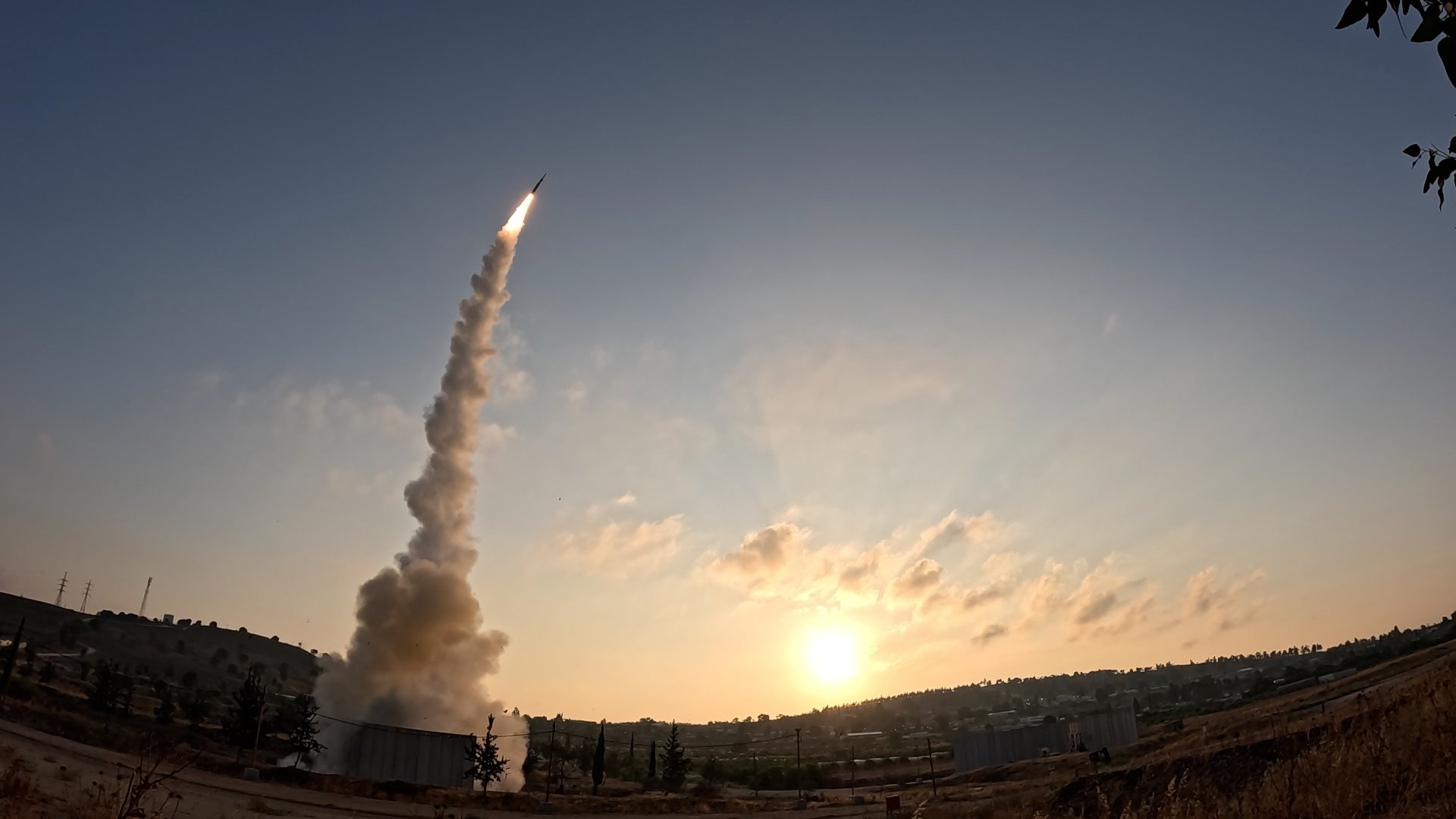
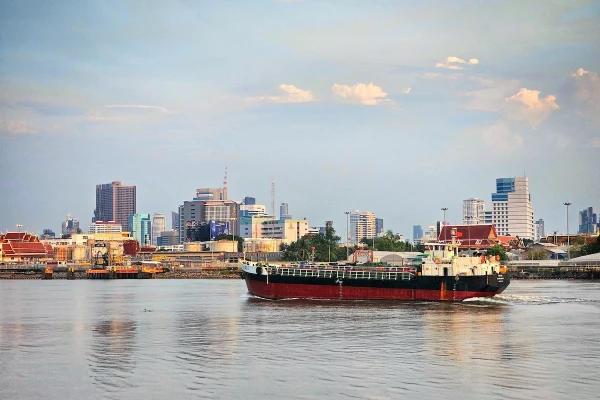
Gulf states unable to ship fertilizer ingredients, posing potential threat to food supply
No less significant than the current war’s impact on the energy are the repercussions it is about to have on the food chain supply – first for the countries under attack and then its ripple effects around the globe.
The closure of the Strait of Hormuz – through which more than a third of the world’s fertilizer supply is exported – comes at the start of the spring planting season.
Two potential food supply crises are occurring simultaneously: Gulf states are unable to import food, and they are also unable to export the ingredients necessary to produce fertilizer.
“The GCC (Gulf Cooperation Council) is definitely dependent on importing food, but that is somewhat replaceable in small quantities, like trucking products through Saudi Arabia to GCC states,” said Yigal Newman, professor of finance and fintech at Hebrew University.
“The second mechanism is actually the opposite direction because agriculture around the world is dependent on fertilizer,” Newman told ALL ISRAEL NEWS. “Food supplies are going to be affected, but the horizon for that is a little bit longer than for energy.”
Farmers around the world are watching this with growing alarm.
“The timing of the conflict is particularly bad for global agriculture, as many regions that depend heavily on Arabian Gulf urea supplies are about to begin their fertilizer and urea application season,” World Fertilizer magazine warned in a March 10 article.
Gulf nations are responsible for nearly half of worldwide urea exports and 30% of ammonia exports, two key ingredients in fertilizer. Major global exporters of these items are Iran, Qatar, Saudi Arabia and Egypt.
“Because these products are essential for crop production, disruptions in the region can influence fertilizer availability and prices well beyond the Middle East,” the American Farm Bureau Federation said.
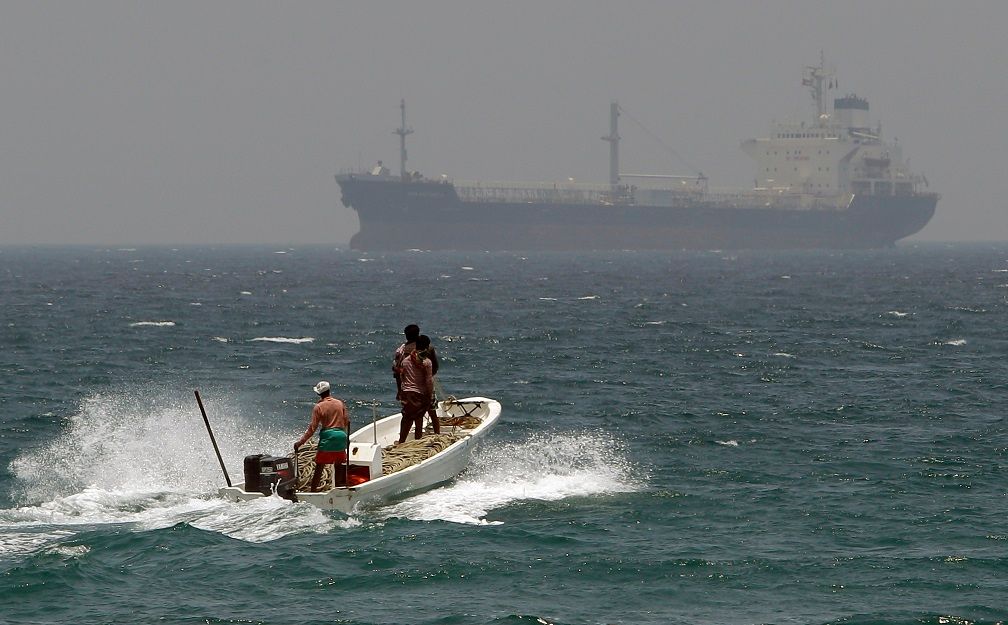
These products would normally exit the region through the Strait of Hormuz, the only maritime entry point into the Persian Gulf – and currently closed by Iran.
“Agricultural production around the world relies on fertilizers coming out of the Gulf – and right now they are not coming out,” Newman said. “So around the world – North Africa, for example – Africa’s agricultural cycle is dependent on fertilizers, some of which are going to be sourced from the Persian Gulf. In the absence of that, that could spell trouble.”
Timing is critical.
“Because of the agricultural clock, you can’t just push a button because the natural cycle has to be adhered to,” Newman said.
HIGHER FOOD PRICES
Is it a coincidence that energy plants in the Gulf – for instance, one in Qatar that burns natural gas to produce fertilizer components – were attacked? Between an inability to produce and export these materials, the economic strain on these nations could complicate alliances.
“Qatar is a big exporter of fertilizer. Fertilizers traditionally go hand in hadn’t with natural gas production,” Newman explained.
That will have a long-term effect on supply and prices.
“If certain foods are expensive in the next year, that should not be a great surprise,” Newman said. “To the extent that some type of food production is going to be affected by a lack of fertilizer, the price of that food will be higher.”
The closure of the Strait of Hormuz “will impact the world’s access to fertilizer, … which will increase the cost of fertilizer, which will increase the cost of food production,” UN secretary-general spokesperson, Stéphane Dujarric, emphasized.
In a report issued this week, the United Nations Conference on Trade and Development noted that “when gas prices go up, fertilizer prices often go up.” The report also estimated that “access to fertilizers may worsen for some of the poorest countries,” many of which are in Africa, including Sudan, Tanzania and Somalia.
Eventually, price increases will spread to markets worldwide.
Robert Kiyosaki, entrepreneur and author of “Rich Dad Poor Dad,” outlined in a social media post exactly how this reaches every person on the planet.
“Iran war → Hormuz disruption → fertilizer shipments blocked → farmers reduce crop applications → harvests fall → food prices rise → central banks raise rates → borrowing costs up → economic growth slows → you pay more for everything,” he
wrote. “That chain starts in a 21-mile strait. It ends in your shopping cart.”
WILL THE GULF FACE FOOD SCARCITY?
In the opposite direction, food imports are not getting into the GCC. More than 70% of GCC food items are imported through the Strait of Hormuz.
According to an
article in Reuters, this could be the “biggest food security challenge since the 2008 global food crisis” that the Gulf states are facing.
The United Arab Emirates imports 80-90% of its food, Saudi Arabia, 80% and Kuwait 95%.
However, the GCC nations all have “strategic” reserves of food supplies that can last several months.
This is not something created in the moment but the result of many years of preparation,” Fawzi Behzad, founding chief executive of the Bahrain Stock Exchange, was
quoted by
Middle East Broadcasting Networks (MBN). “Concerns about food supplies are not limited to wartime but extend to all types of crises and disasters, including natural ones.”
The National, a UAE-based news outlet, reported that the nation hopes to reap the lessons learned during the COVID-19 pandemic, when shipping was curtailed. In 2024, the UAE launched the "Plant the Emirates" initiative in a bid to strengthen its agricultural sector and ensure sustainable food security.
In Israel, farms are under a different threat – an inability to tend to farms in the north, which is under heavy missile fire by Hezbollah.
While the impact on food supplies may be a secondary effect of the conflict, Newman said it is important not to ignore the disruptions now unfolding and their eventual impact on the global economy.
Closure of the Strait of Hormuz threatens global fertilizer supplies, raising fears of food shortages and higher prices as the Iran war disrupts agriculture.

allisraelnews.com

 www.i24news.tv


 she’s got some good insight, but some details are still coming out.