What's new
Christian Community Forum

Register a free account today to become a member! Once signed in, you'll be able to participate fully in the fellowship here, including adding your own topics and posts, as well as connecting with other members through your own private inbox!

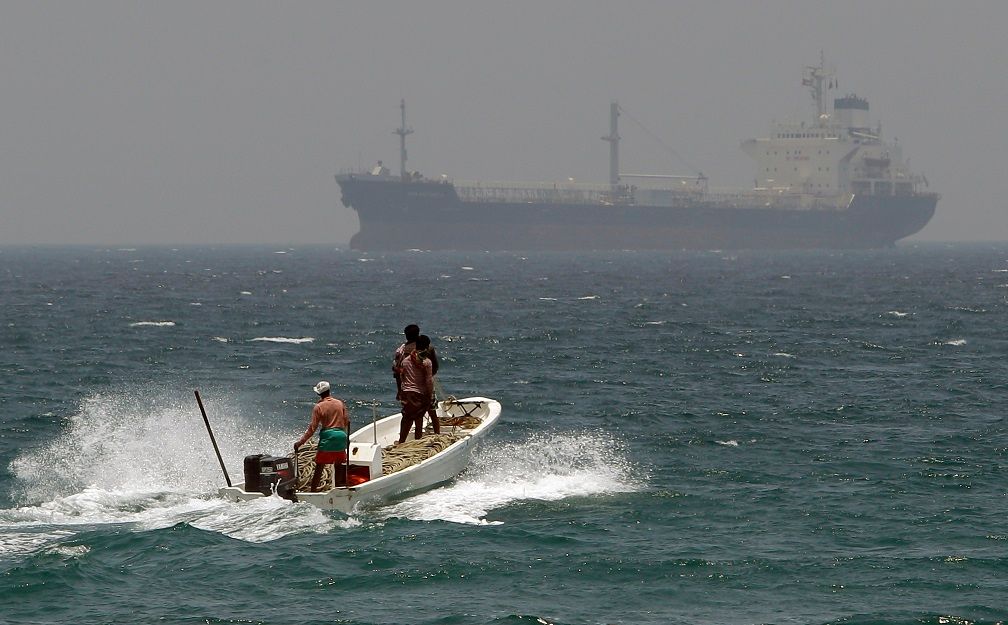
Iran lays mines in Strait of Hormuz, threatening global oil flow - report

Iran has reportedly begun laying naval mines in the Strait of Hormuz, one of the world’s most critical energy corridors, U.S. intelligence sources told CNN response, President Donald Trump announced that the U.S. has already taken action.

“I am pleased to report that within the last few hours, we have hit, and completely destroyed, 10 inactive mine-laying boats and/or ships, with more to follow,” Trump said in a statement on TruthSocial.

The Strait of Hormuz is a narrow passage connecting the Persian Gulf to the Gulf of Oman and the Arabian Sea. Roughly one-fifth of the world’s oil supply passes through the strait each day. Even a minor disruption could cause tanker delays, drive up global oil prices, and create ripple effects for economies heavily reliant on energy imports.

US President Donald Trump issued a strong warning to Tehran, demanding that any mines be removed immediately.

 
Deb read that Lloyds of London has canceled insurance on cargo/oil ships in that area. Hence, the ships have stopped moving. Trump has said the US taxpayers will pay for a new insurance company that will insure the ships. So..... no mines, just no insurance as of now.

If it were Iran mines being laid, Trump wouldn't say the war is practically over.
 
I've read somewhere that ships are turning off their transponders and proceeding through the strait. Who knows? At this point Iran may not have the capability to know what is or isn't moving through the strait.

All it takes is someone with a phone on the shore or a small craft anchored someplace where they can observe the water ways (shipping lanes and otherwise). Binoculars, preferably with night vision and range finding help for plotting and targeting. A good old fashioned compass and sextant . . .

We used to watch the ships go through Death's Door from my Parents' property on the east shore of Green Bay. We had a book that showed country markings and ship types, so we could see where the various ships were from and what kinds of cargo they might be carrying. A LOT of ore ships. If we had had night vision back then, we could have seen who the ships belonged to that went by at night. Different ships had different lighting schemes.

We think the zebra mussels that proliferated through the Great Lakes came from an infected ship (likely Chinese). The Chinese took a LOT of OUR fresh water back with them. The excuse was "ballast." They should have been taking stuff they bought from us back after they dropped their cargo here :tap:
 
I’m surprised they didn’t plan to make sure this area was more secure from this type of thing happening. Below outlines the challenges and efforts to date.


Challenges to Securing the Strait
While the U.S. and its allies continuously monitor the region, fully preventing mines is difficult for several reasons:
  • Geography: The Strait is narrow, with a limited, shallow shipping lane that can easily be obstructed.
  • Asymmetric Tactics: Iran uses small, fast-moving, and low-cost boats to deploy mines, which can be difficult for large, conventional naval vessels to spot and intercept.
  • High-Volume Traffic: Thousands of vessels pass through the region, making constant, comprehensive escorts resource-intensive and, at times, logistically impossible.
  • Threat to Escorts: Naval specialists note that even with an international coalition, protecting every ship is challenging, as small boats or drones could overwhelm individual escort vessels.
    The Strauss Center +4

Efforts and Countermeasures
  • Mine Countermeasure Operations (MCM): The U.S. Navy and allies maintain specialized mine-sweeping capabilities, including unmanned systems (UUVs) and helicopters, to clear routes.
  • Intelligence Surveillance: The U.S. heavily utilizes surveillance to detect minelaying, as evidenced by the quick identification of the recent activity.
  • Naval Presence: The U.S. 5th Fleet remains stationed in the region to deter, detect, and respond to threats.
    channel16.dryadglobal.com
    channel16.dryadglobal.com +4
The situation remains fluid, with the threat of mining acting as a critical, low-cost tool in a broader geopolitical conflict.
 
I’m surprised they didn’t plan to make sure this area was more secure from this type of thing happening. Below outlines the challenges and efforts to date.


Challenges to Securing the Strait
While the U.S. and its allies continuously monitor the region, fully preventing mines is difficult for several reasons:
  • Geography: The Strait is narrow, with a limited, shallow shipping lane that can easily be obstructed.
  • Asymmetric Tactics: Iran uses small, fast-moving, and low-cost boats to deploy mines, which can be difficult for large, conventional naval vessels to spot and intercept.
  • High-Volume Traffic: Thousands of vessels pass through the region, making constant, comprehensive escorts resource-intensive and, at times, logistically impossible.
  • Threat to Escorts: Naval specialists note that even with an international coalition, protecting every ship is challenging, as small boats or drones could overwhelm individual escort vessels.
    The Strauss Center +4

Efforts and Countermeasures
  • Mine Countermeasure Operations (MCM): The U.S. Navy and allies maintain specialized mine-sweeping capabilities, including unmanned systems (UUVs) and helicopters, to clear routes.
  • Intelligence Surveillance: The U.S. heavily utilizes surveillance to detect minelaying, as evidenced by the quick identification of the recent activity.
  • Naval Presence: The U.S. 5th Fleet remains stationed in the region to deter, detect, and respond to threats.
    channel16.dryadglobal.com
    channel16.dryadglobal.com +4
The situation remains fluid, with the threat of mining acting as a critical, low-cost tool in a broader geopolitical conflict.

U.S., Italians, Norwegians, etc. have awesome minesweeper ships and other capabilities to deal with mines and other munitions and hazards in the water.

Unfortunately, unless anchored physically or electronically, such hazards move, necessitating continuous vigilance and action.

It costs a LOT more money and time to build a ship than a bunch of mines or air or underwater drones.
 
Deb read that Lloyds of London has canceled insurance on cargo/oil ships in that area. Hence, the ships have stopped moving. Trump has said the US taxpayers will pay for a new insurance company that will insure the ships. So..... no mines, just no insurance as of now.
(y)she’s got some good insight, but some details are still coming out.

From Reuters:
Insurance companies are canceling war-risk coverage for vessels in the Gulf as the widening Iran conflict disrupted shipping, leaving at least four tankers damaged, two seafarers killed and 150 ships stranded around the Strait of Hormuz https://reut.rs/46VjoXt

From Zero Hedge:

Lloyd's Of London Says Gulf Tanker Coverage Available As Strait Chaos Erupts Again​

What caught the attention of one UBS analyst earlier this morning was a Financial Times report stating that Lloyd's of London is pushing back against claims that insurers are choking off traffic through the Strait of Hormuz. As we have outlined, tanker flows are beginning to creep higher in the strait by midweek, with some tankers switching off their transponders while transiting the narrow waterway.

Lloyd's head of underwriting, Patrick Davison, told the FT that the insurance market is "still providing cover to basically anyone who asks," but stressed that the slowdown in Strait traffic is "not an insurance issue - it's a question of vessel and crew safety."

 
Is it true that the US and Israel are starting to run low on ammo.

Our news is saying that Australia is now lending their Aircrafts and jumping in whilst the US and Israel take tie restocking on missiles etc ?
Not true....


US bypasses congressional review to approve munitions sale to Israel​


  • Summary
  • Trump bypasses Congress for $650M bomb sale to Israel
  • Critics say emergency authority shows lack of war preparation
  • Israel to buy additional $298M munitions via direct commercial sales
WASHINGTON, March 7 (Reuters) - President Donald Trump's administration has bypassed U.S. Congress using an emergency authority to expedite the sale of more than 20,000 bombs to Israel worth ‌around $650 million, two U.S. officials familiar with the sale said.
In a late Friday statement, the U.S. State Department said U.S. Secretary of State Marco Rubio determined that an emergency existed that required an immediate sale to Israel and waived the congressional review requirements for the sale.

The weapons package, which included 12,000 BLU-110A/B general purpose 1,000-pound bomb bodies that Israel had requested, comes a week after the United States and Israel began their joint air war against Iran, Washington's biggest military operation since the 2003 Iraq invasion.

More

 
Not true....


US bypasses congressional review to approve munitions sale to Israel​


  • Summary
  • Trump bypasses Congress for $650M bomb sale to Israel
  • Critics say emergency authority shows lack of war preparation
  • Israel to buy additional $298M munitions via direct commercial sales
WASHINGTON, March 7 (Reuters) - President Donald Trump's administration has bypassed U.S. Congress using an emergency authority to expedite the sale of more than 20,000 bombs to Israel worth ‌around $650 million, two U.S. officials familiar with the sale said.
In a late Friday statement, the U.S. State Department said U.S. Secretary of State Marco Rubio determined that an emergency existed that required an immediate sale to Israel and waived the congressional review requirements for the sale.

The weapons package, which included 12,000 BLU-110A/B general purpose 1,000-pound bomb bodies that Israel had requested, comes a week after the United States and Israel began their joint air war against Iran, Washington's biggest military operation since the 2003 Iraq invasion.

More


Israeli defense tech to get state-backed guarantees to support innovation​


16 Sep 2025

Israel is set to allocate NIS 200 million ($60 million) in state-backed guarantees to support the launch of venture capital funds focused on defense technology innovation, with the aim of strengthening the country’s security independence and technological superiority on the battlefield.

Prime Minister Benjamin Netanyahu said Monday the ongoing war “limits our ability to import weapons and weapons parts, and threatens us with economic setbacks. It’s very difficult to influence that… at least in the coming years we will have to deal with these isolation attempts.”

“We will have to invest in our ability to develop defense and weapons industries here,” he added.

The joint initiative aims to bridge the gap between the current shortage of private capital and funds available for high-risk defense sectors, and the growing need for military innovation as underlined by the ongoing war and in light of the emerging geopolitical risks.

More


Israel’s ‘golden opportunity’ to wean itself off US military aid​


Dec. 13, 2024

Israelis have learned that U.S. military aid is a double-edged sword. On the one hand, the Ministry of Defense has made unprecedented purchases—more than $10 billion during 14 months of war—but on the other, Washington has leveraged that dependence to induce Israel to make decisions counter to its interests.

U.S. governments have tried to leverage weapons supply before, according to Raphael BenLevi of the Misgav Institute for National Security and Zionist Strategy, a Jerusalem-based think tank. However, he tells JNS, “it’s been acute and extreme in the past year.”

Israel is less in need of the aid than it was in the 1970s and 1980s. American aid as a percentage of Israel’s Gross National Product has dropped over the decades, as the Jewish state’s economy has expanded.

Complete Article

 
I know it was widely reported that under Biden our military was "depleted". How much I wouldn't know, but I did take notice that when Trump was back in office he did try to push congress to expand funding in our military.

As for Israel, I have taken note that they are way above most countries in advanced technology, even in their military.
Its been said that Israel has never admitted to having nuclear weapons, but that they do, and because Israel is very good at keeping their military capabilities hushed, no one really knows what they have or dont have
Look at they great job they did with the "beeper" assault they pulled off so smoothly
I dont think Israel has anything to worry about because the Bible says God is going to preserve His remnant in Israel into the Messianic Kingdom.
 
Fertilizer is already in short supply because of shipping "issues" in the area (both Hormuz and Suez)

Hopefully both oil and fertilizer delays can be rectified quickly. Planting season is upon us, or arriving soon.


:pray: :pray: :amen: :amen: :thankyou: :thankyou:

Gulf states unable to ship fertilizer ingredients, posing potential threat to food supply​


No less significant than the current war’s impact on the energy are the repercussions it is about to have on the food chain supply – first for the countries under attack and then its ripple effects around the globe.

The closure of the Strait of Hormuz – through which more than a third of the world’s fertilizer supply is exported – comes at the start of the spring planting season.

Two potential food supply crises are occurring simultaneously: Gulf states are unable to import food, and they are also unable to export the ingredients necessary to produce fertilizer.

“The GCC (Gulf Cooperation Council) is definitely dependent on importing food, but that is somewhat replaceable in small quantities, like trucking products through Saudi Arabia to GCC states,” said Yigal Newman, professor of finance and fintech at Hebrew University.

“The second mechanism is actually the opposite direction because agriculture around the world is dependent on fertilizer,” Newman told ALL ISRAEL NEWS. “Food supplies are going to be affected, but the horizon for that is a little bit longer than for energy.”

Farmers around the world are watching this with growing alarm.

“The timing of the conflict is particularly bad for global agriculture, as many regions that depend heavily on Arabian Gulf urea supplies are about to begin their fertilizer and urea application season,” World Fertilizer magazine warned in a March 10 article.

Gulf nations are responsible for nearly half of worldwide urea exports and 30% of ammonia exports, two key ingredients in fertilizer. Major global exporters of these items are Iran, Qatar, Saudi Arabia and Egypt.

“Because these products are essential for crop production, disruptions in the region can influence fertilizer availability and prices well beyond the Middle East,” the American Farm Bureau Federation said.

These products would normally exit the region through the Strait of Hormuz, the only maritime entry point into the Persian Gulf – and currently closed by Iran.

“Agricultural production around the world relies on fertilizers coming out of the Gulf – and right now they are not coming out,” Newman said. “So around the world – North Africa, for example – Africa’s agricultural cycle is dependent on fertilizers, some of which are going to be sourced from the Persian Gulf. In the absence of that, that could spell trouble.”

Timing is critical.

“Because of the agricultural clock, you can’t just push a button because the natural cycle has to be adhered to,” Newman said.

HIGHER FOOD PRICES

Is it a coincidence that energy plants in the Gulf – for instance, one in Qatar that burns natural gas to produce fertilizer components – were attacked? Between an inability to produce and export these materials, the economic strain on these nations could complicate alliances.

“Qatar is a big exporter of fertilizer. Fertilizers traditionally go hand in hadn’t with natural gas production,” Newman explained.

That will have a long-term effect on supply and prices.

“If certain foods are expensive in the next year, that should not be a great surprise,” Newman said. “To the extent that some type of food production is going to be affected by a lack of fertilizer, the price of that food will be higher.”

The closure of the Strait of Hormuz “will impact the world’s access to fertilizer, … which will increase the cost of fertilizer, which will increase the cost of food production,” UN secretary-general spokesperson, Stéphane Dujarric, emphasized.

In a report issued this week, the United Nations Conference on Trade and Development noted that “when gas prices go up, fertilizer prices often go up.” The report also estimated that “access to fertilizers may worsen for some of the poorest countries,” many of which are in Africa, including Sudan, Tanzania and Somalia.

Eventually, price increases will spread to markets worldwide.

Robert Kiyosaki, entrepreneur and author of “Rich Dad Poor Dad,” outlined in a social media post exactly how this reaches every person on the planet.

“Iran war → Hormuz disruption → fertilizer shipments blocked → farmers reduce crop applications → harvests fall → food prices rise → central banks raise rates → borrowing costs up → economic growth slows → you pay more for everything,” he wrote. “That chain starts in a 21-mile strait. It ends in your shopping cart.”

WILL THE GULF FACE FOOD SCARCITY?

In the opposite direction, food imports are not getting into the GCC. More than 70% of GCC food items are imported through the Strait of Hormuz.

According to an article in Reuters, this could be the “biggest food security challenge since the 2008 global food crisis” that the Gulf states are facing.

The United Arab Emirates imports 80-90% of its food, Saudi Arabia, 80% and Kuwait 95%.

However, the GCC nations all have “strategic” reserves of food supplies that can last several months.

This is not something created in the moment but the result of many years of preparation,” Fawzi Behzad, founding chief executive of the Bahrain Stock Exchange, was quoted by Middle East Broadcasting Networks (MBN). “Concerns about food supplies are not limited to wartime but extend to all types of crises and disasters, including natural ones.”

The National, a UAE-based news outlet, reported that the nation hopes to reap the lessons learned during the COVID-19 pandemic, when shipping was curtailed. In 2024, the UAE launched the "Plant the Emirates" initiative in a bid to strengthen its agricultural sector and ensure sustainable food security.

In Israel, farms are under a different threat – an inability to tend to farms in the north, which is under heavy missile fire by Hezbollah.

While the impact on food supplies may be a secondary effect of the conflict, Newman said it is important not to ignore the disruptions now unfolding and their eventual impact on the global economy.

 
Back
Top