

Ghoti Ichthus
Genesis 18:32, 2 Chronicles 7:14, Acts 5:29
 Guess it's not just defense when it comes to the frenzy over Greenland . . .
Executive Order Gives US Trade Officials Six Months to Negotiate Critical Minerals Supply Deals with Allies
Metal Tech News - January 16, 2026Shane Lasley, Metal Tech News | Last updated Jan 16, 2026 10:57am
"With critical minerals being essential inputs into nearly every facet of the United States' economic and national security, President Donald Trump has signed an executive order directing Commerce Secretary Howard Lutnick and U.S. Trade Representative Jamieson Greer to negotiate agreements with global partners to secure these vital materials.
"While prioritizing domestic production, today's action will also build upon the landmark critical minerals agreements President Trump has secured with key allies and partners, including Australia, Saudi Arabia, Malaysia, Thailand, Japan, and others, to diversify global supply chains and reduce dependence on adversarial nations," the White House stated in a Jan. 14 fact sheet.
The first executive order of 2026 on critical minerals follows a six-month Commerce Department investigation, which found that the U.S. – already heavily reliant on China –cannot build its domestic supply fast enough to keep pace with soaring demand for materials essential to military systems, clean energy, high-tech manufacturing, and everyday consumer goods."
More

Trump initiates a critical minerals blitz
Executive order gives US trade officials six months to negotiate critical minerals supply deals with allies. With critical minerals being essential inputs into nearly every facet of the United States' economic and national security, President Donald Trump has signed an executive order directing...
www.metaltechnews.com
Related . . .
The race for rare earth and critical minerals: From risk to results
January 21, 2026"Setting the stage for a new industrial era
The accelerating global energy transition has triggered one of the most consequential realignments of industrial strategy since the mid-twentieth century. At the center of this transformation lies a class of materials rarely discussed beyond technical circles – rare earth elements (REEs) and critical minerals such as lithium, cobalt, nickel, and graphite. These resources are not inherently scarce, but their extraction, refinement, and integration into advanced technologies are geographically concentrated and strategically sensitive. (1)
Today, nearly every high-value technology – electric vehicles (EVs), wind turbines, smartphones, semiconductors, defense systems, and advanced energy storage – depends on these materials. According to the International Energy Agency (IEA), demand for critical minerals used in clean energy technologies has more than tripled since 2017, with lithium demand growing over sixfold in that period. (1)
This rising dependence on a limited set of supply chains has profound implications. Critical minerals have become the connective tissue linking industrial policy, energy security, and economic competitiveness. In essence, the global race to control them is both a risk to resilience and an opportunity to reindustrialize through cleaner, higher-value production.
This article examines how nations and corporations are adapting to this race – reconfiguring policies, capital, and technology to establish sustainable mineral ecosystems. It also discusses the emerging frameworks that can turn a geopolitically contested market into a foundation for shared industrial growth.
Understanding the fault lines of supply concentration
While mining has diversified marginally, processing remains overwhelmingly centralized. The IEA’s 2025 Global Critical Minerals Outlook reports that the top three refining countries account for approximately 86% of global midstream processing across key transition minerals, up from 82% in 2020. (1) This means that, despite new exploration projects in Africa, Latin America, and Australia, the critical steps that determine purity and value still depend heavily on a handful of nations – principally China.China commands 70–90% of rare earth refining and magnet production and exerts similar control over graphite and antimony processing. (1) Its dominance is underpinned by decades of coordinated industrial policy, subsidies, and ecosystem integration from mine to magnet. This structural advantage enables Beijing to exercise leverage through targeted export restrictions, such as recent curbs on gallium, germanium, and high-purity graphite. (8)"
More
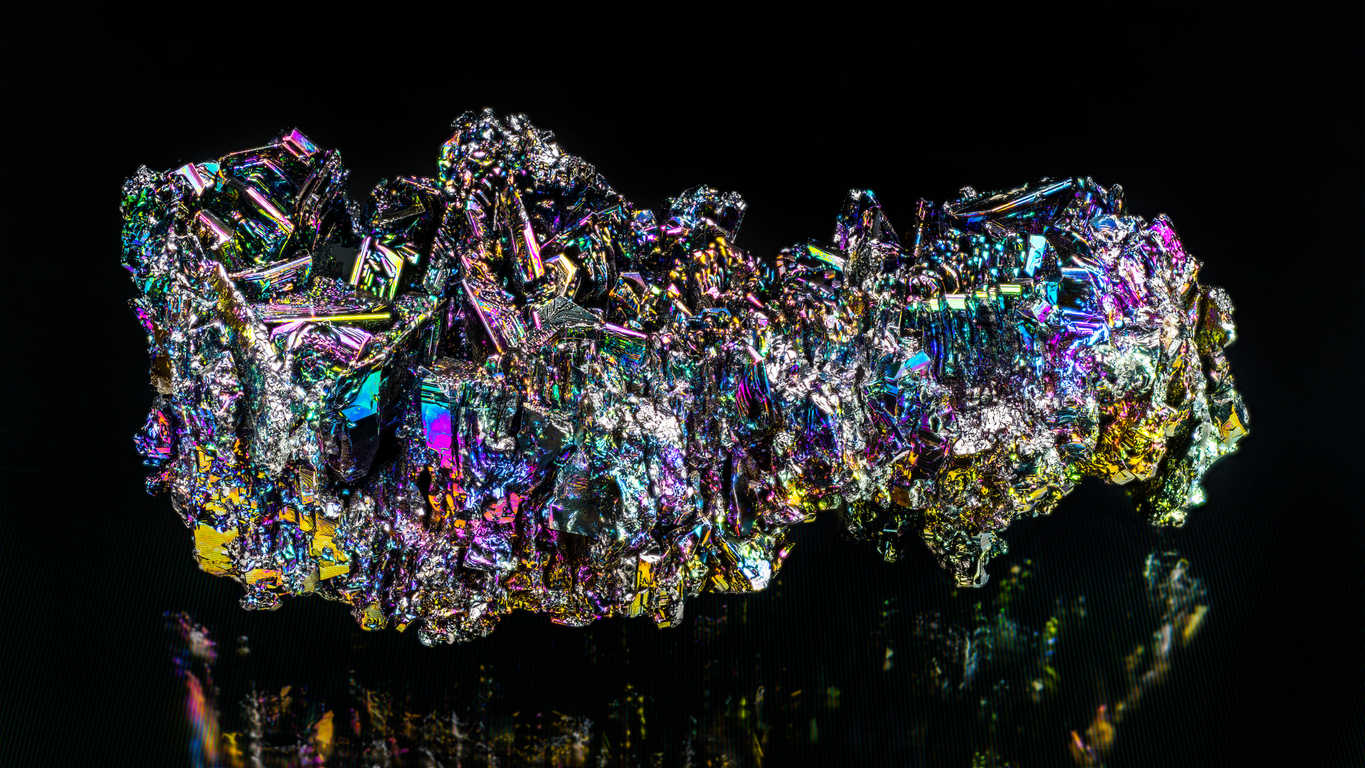
The race for rare earth and critical minerals: From risk to results
Cecilia Van Cauwenberghe examines the competition for rare earth and critical minerals, discussing a sustainable economic opportunity
 www.openaccessgovernment.org
Also related . . .
Trump covets mineral-rich Greenland, but what natural resources does it actually have?
3 days agoArchie Mitchelland
Danielle Kaye,Business reporters
"Donald Trump has made clear he covets Greenland.
Now he claims to have secured the "framework" of a future deal, to address defence on the island - a deal that he says includes rights to rare earth minerals.
So what natural resources does Greenland have?
Greenland is believed to sit on top of large reserves of oil and natural gas.
It is also said to be home to the vast majority of raw materials considered crucial for electronics, green energy and other strategic and military technologies – to which Trump has been pushing to secure America's access.
Overall, 25 of 34 minerals deemed "critical raw materials" by the European Commission are found in Greenland, including graphite, niobium and titanium, according to the 2023 Geological Survey of Denmark and Greenland.
Greenland's strategic importance is "not just about defence", Senator Ted Cruz, a Republican from Texas, said at a Senate hearing last year about the potential acquisition of Greenland, pointing to the island's "vast reserves of rare earth elements"."
More
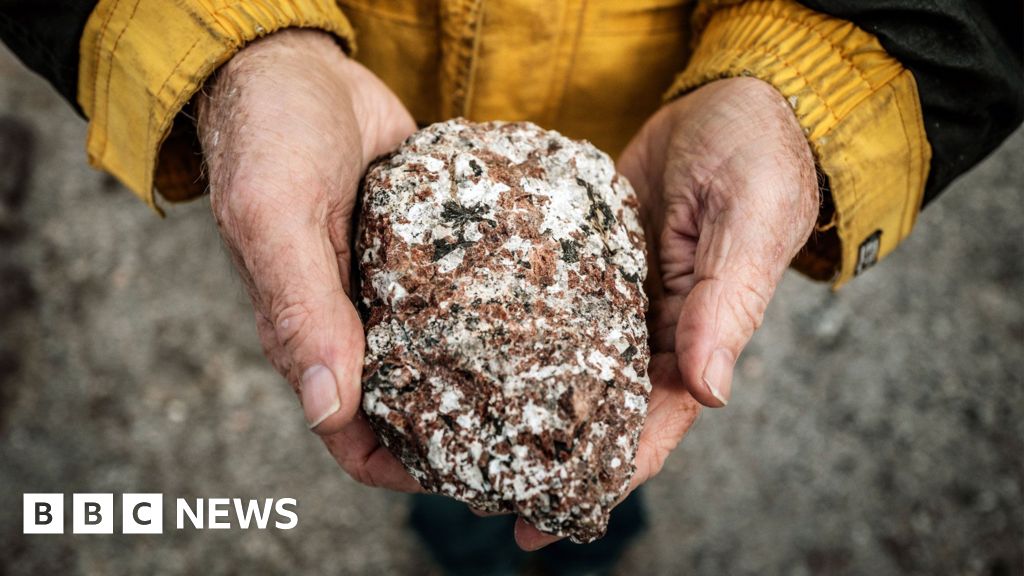
Greenland: What natural resources does the island have?
Greenland's natural resources include large reserves of rare earth deposits.
 www.bbc.com
And also related . . .
AI to accelerate Aclara's rare earth tech
Metal Tech News - January 19, 2026Shane Lasley, Metal Tech News | Last updated Jan 19, 2026 10:42am
"Company partners with Argonne National Lab to create a digital twin to speed commercialization of heavy rare earths separation process.
To accelerate the commercialization of its novel rare earths separation technology, Aclara Resources Inc. has signed a cooperative research and development agreement (CRADA) with the U.S. Department of Energy's Argonne National Laboratory to develop an artificial intelligence-enabled digital twin of the process."By combining our proprietary separation process and pilot-scale data with Argonne's world-class capabilities in advanced computing and artificial intelligence, we expect to accelerate industrial ramp-up, improve efficiency, and further de-risk execution," said Aclara COO Hugh Broadhurst.
The foundational data for this AI model will come from a pilot plant at Virginia Tech that is scheduled to begin operating in March. This facility will test a solvent extraction-based method for separating mixed rare earth carbonates produced at Aclara's Carina project in Brazil into high-purity rare earth oxides."
Project Dynamo in the U.S.
The ongoing development of the rare earths separation technology is timed to be fully operational by the time Carina begins production. Once commercially ready, the tech will be deployed as part of Project Dynamo, a downstream facility planned for Louisiana.
This U.S.-based facility will house a commercial-scale separation plant and metal upgrading capacity, transforming high-purity rare earth oxides produced at the Brazilian mine into the magnet metals needed for electric vehicles, wind turbines, military applications, and other advanced technologies."
More

AI to accelerate Aclara's rare earth tech
Company partners with Argonne National Lab to create a digital twin to speed commercialization of heavy rare earths separation process. To accelerate the commercialization of its novel rare earths separation technology, Aclara Resources Inc. has signed a cooperative research and development...
www.metaltechnews.com


 If you haven’t heard about Dr. Tour, he is a brother in Christ. Right now I’m midway through his study in the Book of Isaiah, the deepest study that I’ve done.


