

Almost Heaven
Well-known
While much of the world's attention remains fixed on Iran and its Shi'ite axis, another geopolitical realignment is taking shape — more quietly, more pragmatically, and potentially just as consequential for the US, Israel and the Middle East.
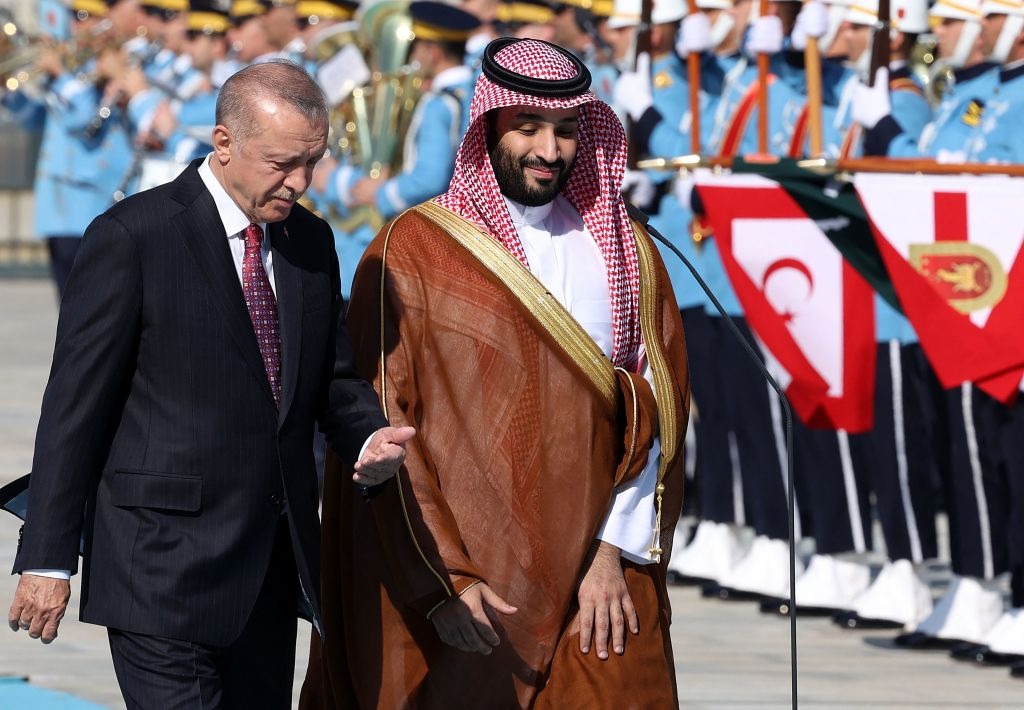
Turkish President Recep Tayyip Erdogan has launched an ambitious diplomatic offensive aimed at unifying the Sunni world under Ankara's leadership. The objective is not merely reconciliation with former rivals. It is the construction of a Sunni diplomatic and strategic "wall," or "noose," around Israel, replacing the Iranian "Shi'ite crescent" with a new configuration of Sunni power.
In early February 2026, Erdogan embarked on a Middle East tour that signaled a turning point. On February 3, he visited Saudi Arabia. On February 4, Egypt. On February 7, Jordan's King Abdullah II was received in Istanbul. These meetings were not symbolic. They marked the culmination of a "normalization" process that has been unfolding since 2022, as Turkey repaired relations that were damaged by its earlier ideological support for the Muslim Brotherhood and confrontations with Gulf monarchies.
This evolving configuration represents a transformation of what was once considered the "moderate Sunni camp" — historically aligned with the United States and tolerant, if not friendly, toward Israel — into a broader Islamic coalition capable of exerting diplomatic, economic and military pressure. Israeli analysts increasingly describe it as the replacement of Iran's Shiite axis with a Sunni bloc influenced by the Muslim Brotherhood.
The coming years will determine whether this Sunni wall strengthens into a unified front or weakens under competing ambitions. For Israel, complacency is not an option. The encirclement may no longer be Shiite, but Sunni — and diplomatic, at first, rather than immediately military. In geopolitics, the form of pressure matters less than its cumulative effect.
 www.gatestoneinstitute.org
Turkish President Recep Tayyip Erdogan has launched an ambitious diplomatic offensive aimed at unifying the Sunni world under Ankara's leadership. The objective is not merely reconciliation with former rivals. It is the construction of a Sunni diplomatic and strategic "wall," or "noose," around Israel, replacing the Iranian "Shi'ite crescent" with a new configuration of Sunni power.
In early February 2026, Erdogan embarked on a Middle East tour that signaled a turning point. On February 3, he visited Saudi Arabia. On February 4, Egypt. On February 7, Jordan's King Abdullah II was received in Istanbul. These meetings were not symbolic. They marked the culmination of a "normalization" process that has been unfolding since 2022, as Turkey repaired relations that were damaged by its earlier ideological support for the Muslim Brotherhood and confrontations with Gulf monarchies.
This evolving configuration represents a transformation of what was once considered the "moderate Sunni camp" — historically aligned with the United States and tolerant, if not friendly, toward Israel — into a broader Islamic coalition capable of exerting diplomatic, economic and military pressure. Israeli analysts increasingly describe it as the replacement of Iran's Shiite axis with a Sunni bloc influenced by the Muslim Brotherhood.
The coming years will determine whether this Sunni wall strengthens into a unified front or weakens under competing ambitions. For Israel, complacency is not an option. The encirclement may no longer be Shiite, but Sunni — and diplomatic, at first, rather than immediately military. In geopolitics, the form of pressure matters less than its cumulative effect.
Erdogan's Sunni Noose: Turkey's Bid to Encircle Israel
Turkish President Recep Tayyip Erdogan has launched an ambitious diplomatic offensive aimed at unifying the Sunni world under Ankara's leadership. The objective is not merely reconciliation with former rivals. It is the construction of a Sunni diplomatic


